
Floyd County Daily Release Source
No official Floyd County 24-hour release list was found. The former county jail closed in 2003, and the building was demolished in 2016. The Floyd County Sheriff's Office remains the local source for arrest and transport records, but its official page does not publish a current roster, daily release feed, field list, update schedule, retention period, or release-photo view. A person arrested in Floyd County may be booked in a receiving county instead.
That structure changes the first question. Ask which agency held physical custody during the chosen 24-hour period. Floyd records can show the arrest, transport time, and destination. The receiving jail controls its admission, release timestamp, reason code, destination, and any booking image. Childress County is one documented destination in recent sheriff reporting, but it must not be treated as the fixed destination for all Floyd arrests. Housing arrangements can change, and a different jail may serve a specific case.
Check Floyd County 24-Hour Releases
Start with a precise interval in Central Time. Write both the opening and closing timestamp, and say whether the endpoints are inclusive. This prevents a midnight release from falling between two vague requests for “today.” For a named person, include the full name, date of birth when lawful and needed, arrest date, and known incident or booking number. For an interval report, request arrests, transports, releases, and receiving facilities tied to that span.
- Contact the Floyd County Sheriff's Office and ask for the arresting agency, transport date and time, and receiving facility.
- Contact the named receiving jail. Request its booking number, admission time, physical release or transfer time, exact reason code, and destination.
- Check IVSS-Counties for a custody event, while treating the portal as a notification tool rather than an official release record.
- Use the Floyd County court file to identify bond, dismissal, commitment, or other authority. Do not substitute the order date for the jail's exit time.
- If the person entered TDCJ, use the TDCJ offender search. County-to-state transfer is continued custody, not community release.
The full named-person workflow is available on the Floyd County released inmate search. For a wider interval, compare the Released Last 72 Hours process. Those links serve different needs: one traces a person, while the other widens the recent-event window.
Keep a short audit trail as the search moves between offices. Record the staff office contacted, the date and time of the inquiry, the identifiers supplied, and the exact wording of each answer. When an office names another jail, ask whether that statement comes from a transport log or from current staff knowledge. The record source matters because custody arrangements can shift. If a receiving jail finds no match, return to Floyd with the date range and ask whether the person went to a different county or was released before transport.
Floyd County Daily Release Fields
Because Floyd County publishes no daily feed, the table below lists the fields to request from the actual custodians. It does not claim that one Floyd form displays them. Ask for native electronic data and the agency's code legend when possible. A stable booking identifier is safer than matching a common name by itself.
| Field | What it establishes |
|---|---|
| Booking or incident number | Connects the Floyd arrest or receiving-jail admission to one record. |
| Arrest and transport times | Shows when Floyd custody began and when the person moved. |
| Receiving facility | Identifies the jail that owns the later custody event. |
| Release date and time | Records when that jail's physical custody ended. |
| Reason or disposition code | Distinguishes bond, time served, court order, or transfer. |
| Destination or next custodian | Shows whether the event led to the community or another agency. |
Quote the reason exactly. “Released to TDCJ,” “released to ICE,” and “released to another county” describe transfers. They do not mean the person was free to leave. If an abbreviation such as TRF appears, ask for its definition. Also check for a detainer, which is a request or legal basis for another authority to hold the person after the first case ends.
Floyd County Release or Transfer
A same-day custody exit can have several meanings. Bond, sentence completion, or a court-ordered release may end confinement. A move to another county, TDCJ, ICE, the U.S. Marshals Service, or a guarded setting does not. The receiving jail's release sheet, destination field, and transport log are the best sources for that distinction.
| Record wording | Careful conclusion |
|---|---|
| Bond, time served, sentence satisfied | Potential community release, subject to other holds. |
| Transfer to county or TDCJ | Custody continued with the named agency. |
| Release to ICE or USMS | Federal custody may have begun. |
| Name absent from a roster | No conclusion without an affirmative event record. |
A court order and a jail timestamp answer related but distinct questions. The order supplies legal authority. The custody system records when staff completed the physical handoff or release. Preserve both if they differ. Use the official Floyd County Clerk or Floyd County District Clerk according to the case type. A clear statement names the releasing custodian, recorded time and reason, and any next agency.
Multiple causes can also overlap. A person may satisfy one bond while remaining held on another warrant or detainer. Request the custody status cause by cause when the record allows it. The safest conclusion is narrow: identify the agency whose custody ended and do not claim more about the person's current location than the destination field supports.
Request Floyd County Release Records
Texas calls the written route a Public Information Act request. Send a narrow request to Floyd County for the arrest or booking sheet, custody chronology, transport log, receiving facility, release or transfer record, bond data, property receipt, and public detainer notation. Then send a matching request to the receiving jail. Government Code Chapter 552 governs access, subject to specific exceptions and confidentiality rules.
Ask for electronic copies and a data dictionary. If an office withholds or redacts material, request the legal basis. Government Code Section 552.301 generally gives an agency ten business days to seek an Attorney General decision when it wants to withhold responsive information. That deadline does not promise delivery within ten days. Charges follow state rules, and an estimate over $40 triggers an itemized statement under Section 552.2615.
Why Floyd Has No Daily Roster
Floyd County's roster quirk is not a short online retention period. There is no operating local jail. This is why an authentic rolling list cannot be bookmarked at a Floyd jail URL. The old jail address that appears in some directories is the Sheriff's records contact, not an active detention facility. Local closure history and the current official Sheriff page support that distinction.
The practical substitute is a custody-chain join. Match the Floyd transport destination to the receiving jail's booking number. Then match that jail's release or transfer code to the court file or next custodian. This method prevents a move between agencies from being mislabeled as a release. It also explains why a Childress roster, even if current, cannot be branded as a Floyd County 24-hour list: it may include arrests from elsewhere and omit Floyd detainees held somewhere else.
The official Floyd Sheriff page and former-jail contact is shown below. Its value is the agency contact and the absence of a release control, not a hidden recent-release feed.
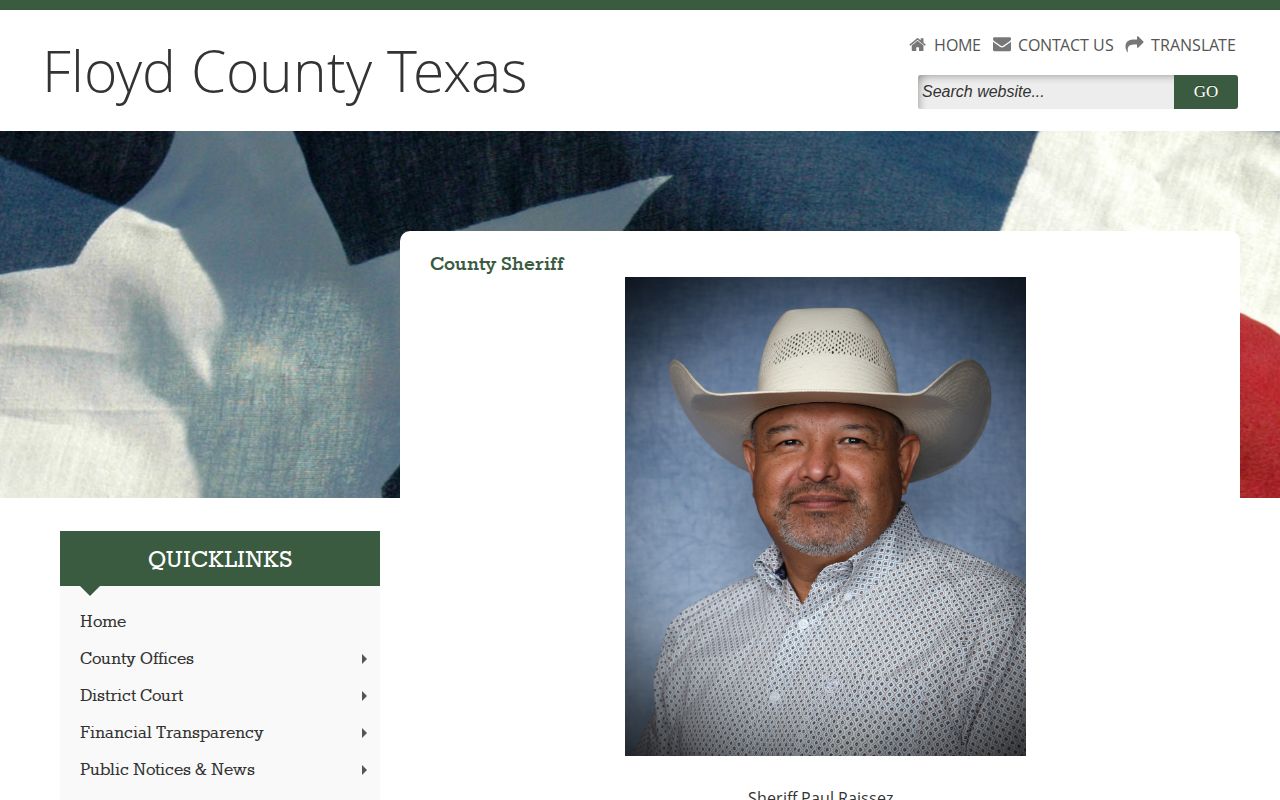
Use that office to identify the destination, then verify the event with the jail that actually held the person.
Floyd Release Apps and Reports
No Floyd County jail-information mobile app was verified. Do not use an app belonging to Floyd County, Georgia. The Floyd County Record publishes selected sheriff activity reports and may credit agency-supplied or social material. Those narratives can help identify an arresting agency, event date, or reported destination, but they are not a complete booking ledger and do not establish every release.
Silence has no fixed meaning. A social post that disappears does not prove release, dismissal, expunction, or record correction. An arrest report that stays online does not prove current custody. Treat local reporting as a discovery lead, then request the arrest, transport, and receiving-jail record. IVSS can add a notification event, but its own warning says people no longer in custody may not appear and its data is not the official record.
Note: A just-entered event may lag a portal or report, so verify the agency-recorded timestamp before describing a same-day release.