
Trace Floyd County Releases
The official Floyd County Sheriff contact page shows the local agency source used to start the release-record chain.
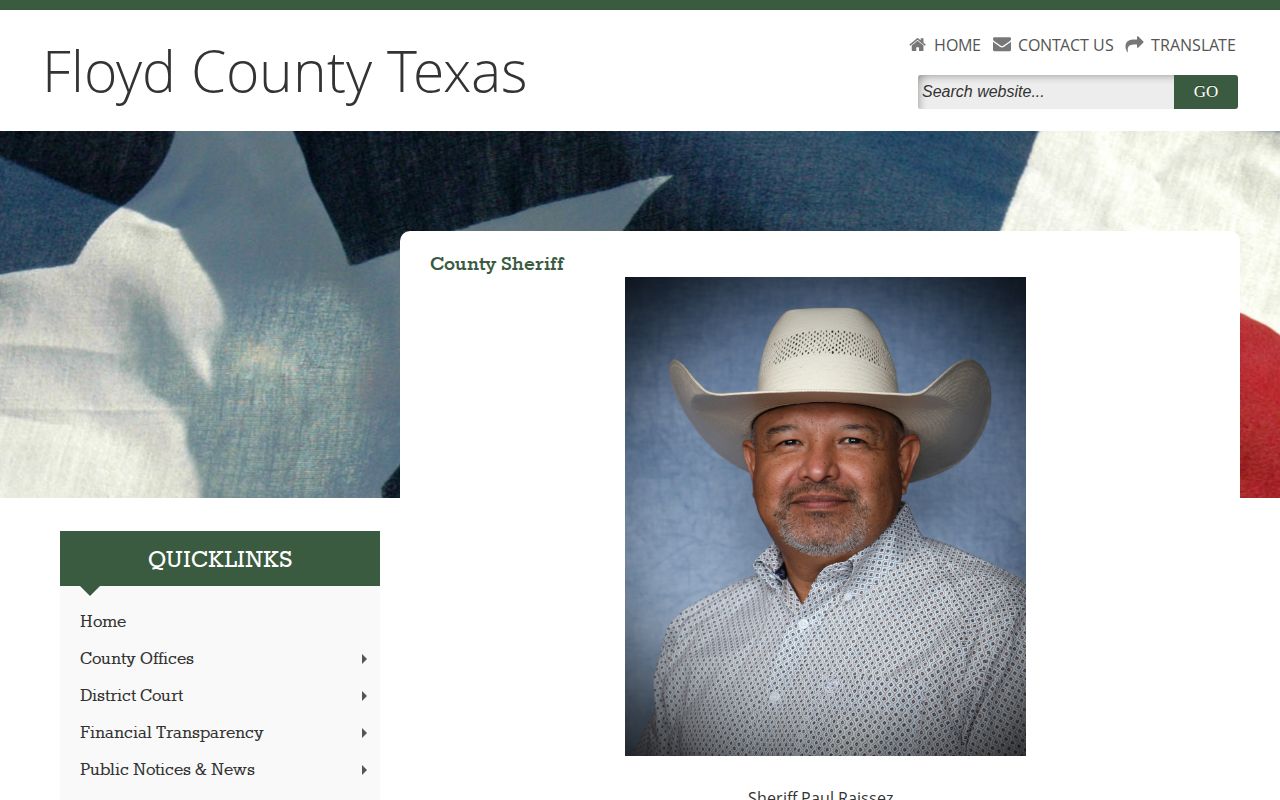
The captured page supports contacting the Sheriff, not the existence of a current Floyd County jail roster.
The Floyd County Sheriff's Office is the first custodian in a local arrest chain, but it is not an operating detention facility. Its file can identify the arresting agency, incident or booking number, arrest time, charge, court, bond facts, transport time, and destination. The destination matters most. The receiving county jail controls the later custody entry and records whether the person bonded out, completed a county sentence, left under court order, or moved to another authority.
A name disappearing from one agency's view is not proof of community release. County custody may end because TDCJ accepted a sentenced person. ICE, the U.S. Marshals Service, another county, or another lawful custodian may also take control. Ask for the destination and the exact release or transfer code. A sound conclusion states which agency ended custody, when it happened, why the record says it happened, and whether another custodian was named.
| Record holder | What it establishes |
|---|---|
| Floyd County Sheriff | Arrest and transport destination |
| Receiving jail | Admission, custody events, release time, reason, and destination |
| Case court | Bond, judgment, dismissal, sentence, or other legal order |
Confirm Former Jail Release Records
Start with the official Floyd County Sheriff page. Give staff the full name and arrest date, then ask which facility received the person. Childress County is one documented destination, not a standing answer for every case. Housing can change with the date, available beds, and case circumstances. Once Floyd names the jail, use that county's official contact and current custody system.
- Record the Floyd incident, booking, or transport identifier and destination.
- Ask the receiving jail to match its booking number to that transport.
- Obtain the actual release date, time, reason code, and stated destination.
- Check the court file for the order or disposition behind the event.
- If the record names TDCJ, ICE, USMS, or another county, continue with that custodian.
The Floyd County released inmate search explains the full county records path. Texas IVSS-Counties may help with current participating county custody and alerts, but it is not the official release sheet. Former detainees can disappear from notification systems. Preserve the agency record instead.
Floyd Sheriff Release Record Requests
Texas treats this as a Public Information Act request under Government Code Chapter 552, not a federal FOIA request. Request existing records with a narrow person and date range. Useful targets include the arrest or booking sheet, transport log, receiving facility, custody chronology, physical release or transfer record, reason and destination code, bond information, property receipt, detainer notation, and booking photograph. Ask for native electronic copies and a code dictionary when abbreviations appear.
Floyd County Sheriff's Office125 E. California Street
Floydada, TX 79235
806-983-4901
Call before visiting; verified records-unit hours were not found.
Send a request only through a delivery method currently designated by the agency. The Texas Attorney General request guidance explains that a government body may require its stated submission channels. No local copy price was verified. Ask for a written estimate under the applicable state cost rules instead of assuming a fee.
Why Floyd Jail Records Moved
The former Floyd County jail's closure is an operational fact, not mere local history. Reporting dates the closure to 2003 and demolition of the old building to 2016. Yet directories may still pair the Sheriff's California Street address with the word “jail.” That address is now a Sheriff and records contact. It must not be presented as a place with a live inmate desk, release board, or recent-booking roster.
Closure split the record trail. Floyd documents the local arrest and outbound transport. Another county documents detention and release. The Floyd court may hold the durable bond, judgment, dismissal, commitment, or sentence record after a jail interface changes. This explains why one phone call or one name search can produce an incomplete answer.
Read Floyd Release Record Fields
A receiving-jail record should be tied to a stable booking number, not a name alone. Ask for booking date and time, arresting agency, charges, bond, court, housing status, release date and time, release reason or disposition code, destination or transfer agency, detainers, and the booking photo if lawfully available. The word “released” may describe bond, time served, a court order, transfer, or another agency's custody. Obtain the code legend.
- Release to community
- The custodian records that confinement ended without naming a next jail or agency.
- Transfer
- Physical custody moved to another authority; confinement did not end.
- Discharge
- The sentence or supervision obligation shown by that system ended.
- Detainer
- A request or legal basis for another authority to assume or retain custody.
A court order and a jail timestamp answer different questions. The order can authorize release, set bond, dismiss a charge, or impose a sentence. The jail record shows when staff carried out the custody event. Keep both dates when they differ and label each precisely.
Follow Floyd Transfer Destinations
If the destination is TDCJ, use the statewide offender search and TDCJ information channels. Transfer to a prison unit is not a county release. Parole or mandatory supervision later ends confinement while supervision continues; discharge means the obligation shown by TDCJ ended. No TDCJ prison unit was identified within Floyd County.
For federal custody, use the BOP locator only when the person entered the federal prison system. A county handoff to ICE requires the ICE locator or Enforcement and Removal Operations contact. The U.S. Marshals Service does not provide a public prisoner locator comparable to BOP. In each branch, the next custodian's record controls what happened after Floyd or the receiving county ended its custody.
Note: Do not infer a present location from an old destination; confirm the complete chain with each named custodian.
Join Floyd Release Records
The strongest Floyd County method is a custody-chain join. Begin with the transport destination in the Sheriff's file. Match it to the destination jail's booking number, then match that jail's release or transfer code to the court order or next custodian. This method prevents two common errors: treating the end of Floyd's physical control as release, and treating a court order date as the time jail staff completed release.
Preserve the exact agency-recorded wording. “Released to the community” should be used only when the custodian's timestamp and reason support it. A handoff should be stated as release from one agency to the named next custodian, with continued custody made clear. For TDCJ, distinguish release from confinement to parole or mandatory supervision from final discharge. If the destination is blank or coded, ask the record holder for its meaning rather than filling the gap.
Keep a source log with the URL, access date, office contacted, request wording, response date, and any redaction or legal citation. Do not publish private notification credentials or needless personal details. A narrow conclusion is the most accurate one: name the custodian, event, time, reason, and destination that the official records actually establish.
When Floyd and the receiving county use different incident or booking numbers, place both on the request. That link helps each records office locate its own portion of the event. If the receiving jail reports a second transfer, request the next agency's admission before closing the chronology. The chain ends only where an affirmative record shows community release, supervised prison release, final discharge, or another clearly named outcome.
Public Record Search
Sponsored Results