
Trace Federal BOP Releases
The official BOP Inmate Locator supplies the nationwide search form for federal custody and release records.
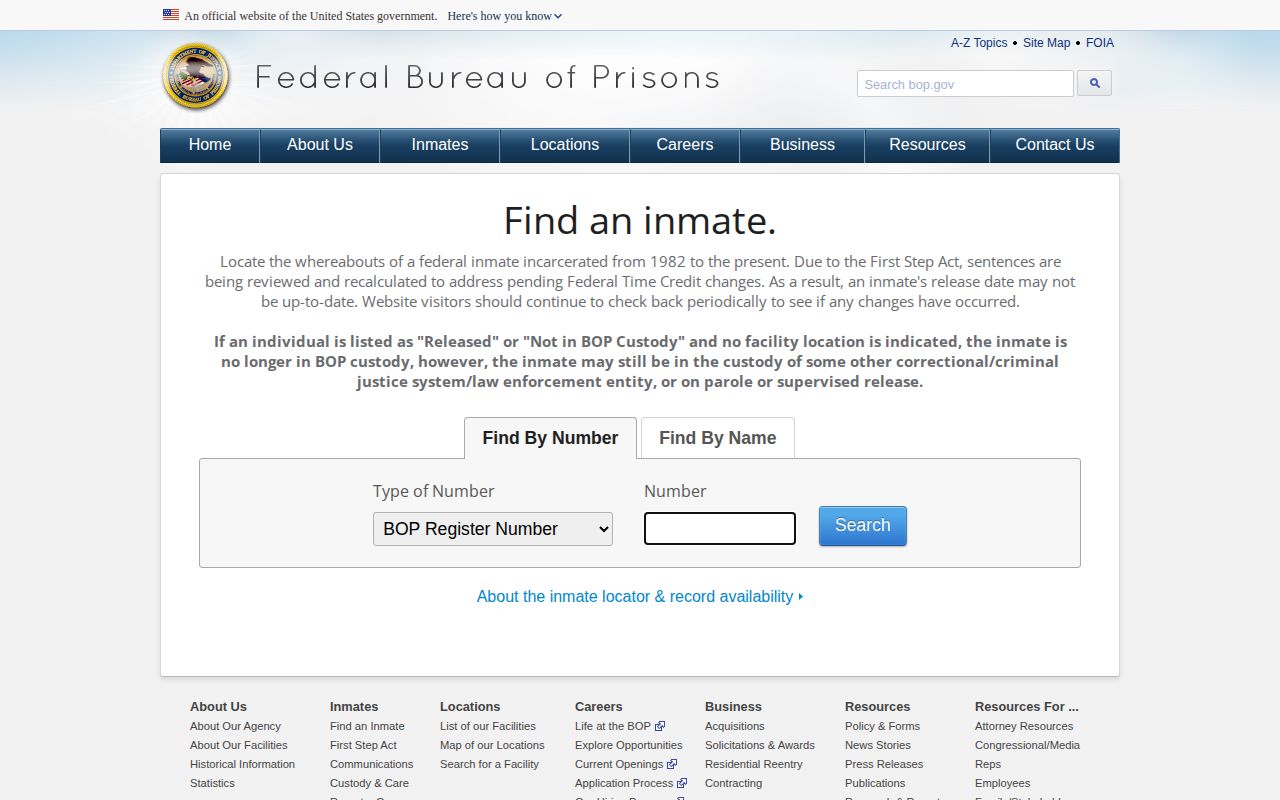
The locator must be read under BOP's own status definitions, especially for “RELEASED” and future dates.
The Federal Bureau of Prisons controls sentenced federal prison records, not Floyd County and not TDCJ. A federal court commitment may lead to a BOP institution outside Texas. The locator's register number links the record across institutions. A past release date with no institution, or the location “RELEASED,” means BOP custody ended.
That narrow federal result should not be overstated. BOP release may lead to community supervision, Community Corrections Management, immigration custody, or another lawful hold. “IN TRANSIT” is not release. A future release date is projected, while “UNKNOWN” means the current term is not determined or available in the shown field.
| Record holder | What it establishes |
|---|---|
| Floyd County Sheriff | Arrest and transport destination |
| Receiving jail | Admission, custody events, release time, reason, and destination |
| Case court | Bond, judgment, dismissal, sentence, or other legal order |
Search Federal Release Records
Start with the official BOP Inmate Locator. An eight-digit register number is the strongest search key. A name search also accepts age, race, and sex. BOP says online records generally cover federal inmates released after 1982. Read the location and release-date fields together, then consult the BOP record definitions before stating the result.
- Use the eight-digit federal register number when available.
- For a name search, enter the legal name and narrow with age, race, and sex.
- Match the result to the federal case and institution history.
- Read “RELEASED,” “IN TRANSIT,” and a future date as different states.
- Use BOP FOIA when the public locator does not supply the needed history.
The Floyd County released inmate search explains how a local transfer can connect to a later federal record. County notification portals do not cover BOP custody.
Request Federal Release Records
Use the BOP Freedom of Information Act channel when the locator does not contain the needed federal history. Identify the person, eight-digit register number, institution, and date range. Request the specific custody, transfer, release, or designation records needed rather than a broad file. The federal process is separate from a Texas Chapter 552 request to Floyd County.
Federal Bureau of PrisonsNationwide federal prison system
Use the official locator and FOIA channels
No BOP institution is located in Floyd County
Follow the current BOP submission instructions and ask for any applicable estimate through that federal channel. A separate Texas request may still be needed for the county transfer record.
Floyd and Federal Custody Differ
A Floyd County arrest is ordinarily a county record, while BOP covers federal prison custody. A county transfer to the U.S. Marshals Service or another federal authority does not itself prove entry into BOP or release. The Marshals Service does not offer a public prisoner locator comparable to BOP, so the federal court file and agency contacts may be needed before the BOP number exists.
Closure split the record trail. Floyd documents the local arrest and outbound transport. Another county documents detention and release. The Floyd court may hold the durable bond, judgment, dismissal, commitment, or sentence record after a jail interface changes. This explains why one phone call or one name search can produce an incomplete answer.
Read Federal Release Fields
The locator result should be tied to the register number and matched name. Preserve the institution or location text, displayed release date, and any explanatory note. A blank institution paired with a past release date can support the date BOP custody ended. It cannot establish the person's current place or whether a court-ordered supervision term remains.
- Release to community
- The custodian records that confinement ended without naming a next jail or agency.
- Transfer
- Physical custody moved to another authority; confinement did not end.
- Discharge
- The sentence or supervision obligation shown by that system ended.
- Detainer
- A request or legal basis for another authority to assume or retain custody.
A court order and a jail timestamp answer different questions. The order can authorize release, set bond, dismiss a charge, or impose a sentence. The jail record shows when staff carried out the custody event. Keep both dates when they differ and label each precisely.
Follow Floyd Transfer Destinations
If the destination is TDCJ, use the statewide offender search and TDCJ information channels. Transfer to a prison unit is not a county release. Parole or mandatory supervision later ends confinement while supervision continues; discharge means the obligation shown by TDCJ ended. No TDCJ prison unit was identified within Floyd County.
For federal custody, use the BOP locator only when the person entered the federal prison system. A county handoff to ICE requires the ICE locator or Enforcement and Removal Operations contact. The U.S. Marshals Service does not provide a public prisoner locator comparable to BOP. In each branch, the next custodian's record controls what happened after Floyd or the receiving county ended its custody.
Note: Do not infer a present location from an old destination; confirm the complete chain with each named custodian.
Interpret Federal Release Status
BOP's public record covers federal inmates released after 1982 in general, subject to its stated exceptions and data limits. Match the eight-digit register number whenever possible. A past release date with no institution supports that BOP custody ended on the displayed date. The location “RELEASED” carries the same limited meaning. Neither field proves that a court supervision term ended.
Other labels require care. “IN TRANSIT” means movement within federal custody, not community release. Community Corrections Management can relate to prerelease placement or supervision administration and should not be reduced to a simple prison-release claim. A future date is projected. “UNKNOWN” means the term is not determined or displayed as a known date. Preserve the exact BOP label in any record note.
If the locator lacks the needed history, use the official BOP FOIA process and identify the person, register number, date range, institution, and precise records sought. A federal court docket can explain the judgment and supervision terms, while BOP records establish its custody event. For a Floyd County handoff first recorded by a county agency, retain that transfer time separately from later federal admission and release dates.
Do not substitute a Texas court record or TDCJ result for the federal record. State and federal custodians keep separate identifiers and event dates. When another authority takes custody after BOP, follow the destination stated in the federal record. If no destination is public, limit the conclusion to the end of BOP custody and avoid claims about the person's current circumstances.
Preserve the source URL, search date, register number, displayed location, and release-date text. If a federal court order and BOP event fall on different days, explain that the order set legal authority while BOP recorded the physical custody change. A later supervision record may add another date without changing the BOP release timestamp.
For a Floyd County arrest that later enters federal custody, ask the local and receiving agencies for the named federal destination. That handoff record links the county booking to the BOP identity. Without it, a similar name in the federal locator may describe someone else. The register number, court docket, and admission facts should agree before a federal release date is attributed to the Floyd event.
Public Record Search
Sponsored Results